
Canto
11
Canto
11
Hoofdstuk 1: De Vloek over de Yadudynastie
(1) S'rî S'uka zei: 'Nadat Heer Krishna, samen met Balarâma en omringd door de Yadu's, de uitroeiing van de Daitya's had bewerkstelligd en de last van de aarde had verminderd, deed zich zeer spoedig een conflict voor [tussen de Kaurava's en de Pândava's]. (2) Zij [de Pândava's] die steeds maar tot woede gedreven werden door het valse gokken, de beledigingen, het aan de haren [van Draupadî] trekken en de andere overtredingen van hun vijanden [hun neven, de Kaurava's], vormden voor de Allerhoogste Heer de directe aanleiding [met de historische dynastieke strijd, zie ook Yayâti en 10.49 & 10.68] om de aarde [verder] van haar last te verlossen en [ook] al de koningen te doden die zich verzamelden [te Kurukshetra] om zich tegenover elkaar op te stellen. (3) En nadat de Yadu's, onder Zijn leiding, de koningen en hun legers die een last voor de aarde vormden hadden uitgeschakeld, zei de Ondoorgrondelijke tot Zichzelf: 'Men kan wel beweren dat de aarde van haar last is bevrijd, maar Ik denk niet dat die lading is verdwenen. De onverdraaglijke last houdt [helaas] aan in de vorm van de Yadudynastie zelf [zie ook 4.16: 13]. (4) Zij, die in alle opzichten bij Mij hun toevlucht zochten, werden nimmer teleurgesteld in de uitoefening van hun macht. Aangezien er voor hen vanuit geen enkele andere hoek een nederlaag te vrezen valt, zal Ik voor een ruzie zorgen binnen de Yadudynastie, als betrof het een brand in een bamboebos [door de wind gegenereerd middels onderlinge frictie]. Zo zal Ik Mijn [doel: Mijn] hemelse vrede bereiken [zie ook 3.3: 14 en 8.8: 37].'
(5) Met dat voornemen, o Koning, trok de Heer, de Almachtige die alles wat Hij wil gedaan krijgt, Zijn familie terug met behulp van een vloek die door de brahmanen over hen werd uitgesproken. (6-7) Nadat Hij met Zijn gedaante, de schoonheid van alle werelden, de ogen van de mensen had bevrijd, met Zijn woorden de geesten had bekoord van allen die ze zich herinnerden, en met Zijn voeten de [verkeerde] handelingen had afgewend van een ieder die hen zagen, bereikte de Heer, die Zijn glorie moeiteloos op aarde verspreidde, die in de mooiste verzen wordt bezongen, en waarmee men de oceaan van onwetendheid oversteekt, Zijn [verlangde] positie [van vrede en gelukzaligheid, zie ook 7.5: 23-24].'
(8) De Koning zei: 'Hoe kwam het tot deze vloek van de geleerden tegen de Vrishni's? Geheel verzonken in Krishna waren ze altijd liefdadig en respectvol jegens de brahmanen en dienden ze de ouderen. (9) Wat leidde tot die vloek en wat was het voor een vloek, o zuiverste onder de tweemaalgeborenen? Alstublieft vertel me hoe er deze tweedracht [kon ontstaan] onder hen die dezelfde ziel [van Krishna] delen.'
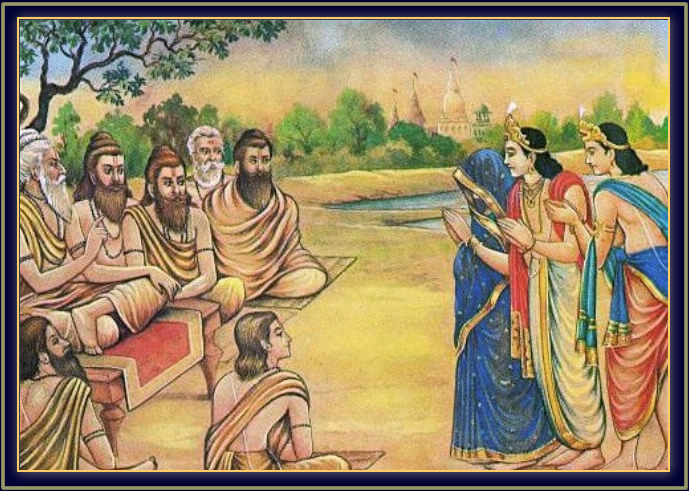
(10) De zoon van Vyâsa zei: 'Belichaamd in een gedaante waarin alles wat mooi was samenviel, op aarde de meest gunstige handelingen verrichtend, en Zich ophoudend in Zijn verblijfplaats [Dvârakâ] genietend naar Zijn volle tevredenheid, wilde Hij, zo hoog geprezen, [nu] Zijn dynastie vernietigen. Dat was het enige wat Hem nog te doen stond. (11-12) Na thuis bij de heer van de Yadu's [Vasudeva] hoogst zegenrijke rituelen te hebben uitgevoerd, om vroomheid af te roepen en de onzuiverheden van Kali-yuga weg te nemen, werden de wijzen Vis'vâmitra, Asita, Kanva, Durvâsâ, Bhrigu, Angirâ, Kas'yapa, Vâmadeva, Atri, Vasishthha, Nârada en anderen, door de Ziel van de Tijd [Heer Krishna] erop uitgestuurd zich naar Pindâraka te begeven [een pelgrimsoord]. (13-15) [Daar aangekomen] werden ze door jonge knapen van de Yadudynastie benaderd in een spel waarin Sâmba, de zoon van Jâmbavatî [zie ook 10.68], zich had uitgedost in vrouwenkleren. Nederigheid veinzend grepen ze hun voeten beet en vroegen ze onbeschaamd: 'Deze zwartogige zwangere vrouw wil u wat vragen, maar ze is te verlegen om het zelf te doen. Kan u wiens blik altijd helder is, zeggen of zij, die op het punt staat te bevallen en graag een zoon wil, er een zal krijgen?'
(16) O Koning, de wijzen, aldus voor de gek gehouden, zeiden kwaad tot hen: 'Zij, o dwazen, zal een knots baren die de dynastie zal vernietigen!'
(17) Hevig geschrokken dat te horen, haastten ze zich de buik van Sâmba vrij te maken, waar inderdaad een knots gemaakt van ijzer was te zien. (18) 'Wat hebben we gedaan? Wat zal de familie wel niet zeggen? Wat een ramp!' zeiden ze van streek, pakten de knots en gingen naar huis. (19) Met de schoonheid uit hun gezichten verdwenen, namen ze de knots mee naar een vergadering van de koning [Ugrasena] en vertelden in aanwezigheid van alle Yadu's wat er gebeurd was. (20) Toen ze de knots zagen en hoorden over de onfeilbare vloek van de geleerde zielen, o Koning, waren de bewoners van Dvârakâ ontsteld en werden ze verscheurd door angst. (21) Âhuka [Ugrasena], de Yadukoning, liet de knots tot gruis vermalen en wierp vervolgens het ijzer, samen met de resterende stukken van de knots, in zee. (22) Een of andere vis slokte het ijzer op, terwijl het gruis door de golven werd meegevoerd en aan de kust aanspoelde om daar uit te groeien tot rietstengels met scherpe bladranden [genaamd eraka]. (23) De vis werd, samen met andere vissen in zee, door een visser opgevist met een net. Het stuk ijzer, dat de vis in zijn maag had, werd door een jager [genaamd Jarâ] op een schacht bevestigd [als pijlpunt]. (24) Hoewel de Opperheer heel goed wist wat dat allemaal te betekenen had, wilde Hij de vloek van de geleerden niet terugdraaien, en dus legde Hij, in Zijn Tijdgedaante, Zich erbij neer.'


Derde herziene editie, geladen 27 januari, 2022.
Voorgaande Aadhar-editie en Vedabase links:
S'rî S'uka zei: 'Nadat Heer Krishna, samen met Balarâma en omringd door de Yadu's, de uitroeiing van de Daitya's had bewerkstelligd en de last van de aarde had verminderd, deed zich zeer spoedig een conflict voor [tussen de Kaurava's en de Pândava's].
S'rî S'uka zei: 'Nadat Heer Krishna omringd door de Yadu's samen met Râma de uitroeiing van de daitya's realiseerde en de last van de aarde terugbracht, deed zich zeer spoedig een conflict voor [onder de Yadu's]. (Vedabase)
Zij [de Pândava's] die steeds maar tot woede gedreven werden door het valse gokken, de beledigingen, het aan de haren [van Draupadî] trekken en de andere overtredingen van hun vijanden [hun neven, de Kaurava's], vormden voor de Allerhoogste Heer de directe aanleiding [met de historische dynastieke strijd, zie ook Yayâti en 10.49 & 10.68] om de aarde [verder] van haar last te verlossen en [ook] al de koningen te doden die zich verzamelden [te Kurukshetra] om zich tegenover elkaar op te stellen.
De Allerhoogste Heer, de aarde verlossend van haar last door al de koningen ter dood te brengen die tezamen kwamen om zich tegenover elkaar op te stellen, maakte dat degenen die telkens weer tot waanzin werden gedreven door het valse gokken, de beledigingen, het aan de haren [van Draupadî] trekken en de andere overtredingen van hun vijanden, de onmiddellijke aanleiding vormden [van de dynastieke strijd, zie ook Yayâti en 10.49 & 10.68]. (Vedabase)
En nadat de Yadu's, onder Zijn leiding, de koningen en hun legers die een last voor de aarde vormden hadden uitgeschakeld, zei de Ondoorgrondelijke tot Zichzelf: 'Men kan wel beweren dat de aarde van haar last is bevrijd, maar Ik denk niet dat die lading is verdwenen. De onverdraaglijke last houdt [helaas] aan in de vorm van de Yadudynastie zelf [zie ook 4.16: 13].
De Ondoorgrondelijke Heer overdacht het van de aarde wegvagen van de last aan koninklijke legers door de Yadu's, door Zijn armen beschermd: 'Men zou waarlijk kunnen zeggen dat de aarde van haar last is verlicht, maar Ik denk dat die nog niet weggenomen is, omdat van de Yadu-dynastie het onverdraaglijke helaas aanhoudt [zie ook 4.16: 13]. (Vedabase)
Zij, die in alle opzichten bij Mij hun toevlucht zochten, werden nimmer teleurgesteld in de uitoefening van hun macht. Aangezien er voor hen vanuit geen enkele andere hoek een nederlaag te vrezen valt, zal Ik voor een ruzie zorgen binnen de Yadudynastie, als betrof het een brand in een bamboebos [door de wind gegenereerd middels onderlinge frictie]. Zo zal Ik Mijn [doel: Mijn] hemelse vrede bereiken [zie ook 3.3: 14 en 8.8: 37].'
Van dezen nimmer gefrustreerd in hun beheersing die alleszins tot Mij hun toevlucht namen, zal er zeer zeker nimmer een nederlaag te verwachten zijn vanuit een andere hoek; met het inspireren tot een ruzie binnen de Yadu-dynastie als betrof het een brand in een bamboebos, zal Ik Mijn [doel: Mijn] verblijfplaats van de vrede bereiken [zie ook 3.3: 14 en 8.8: 37].' (Vedabase)
Met dat voornemen, o Koning, trok de Heer, de Almachtige die alles wat Hij wil gedaan krijgt, Zijn familie terug met behulp van een vloek die door de brahmanen over hen werd uitgesproken.
Aldus het Zich voornemend, o Koning, trok de Beheerser, de Almachtige van wie ieder verlangen ingang vindt, Zijn familie terug door een vloek van de geleerden over hen af te roepen. (Vedabase)
Nadat Hij met Zijn gedaante, de schoonheid van alle werelden, de ogen van de mensen had bevrijd, met Zijn woorden de geesten had bekoord van allen die ze zich herinnerden, en met Zijn voeten de [verkeerde] handelingen had afgewend van een ieder die hen zagen, bereikte de Heer, die Zijn glorie moeiteloos op aarde verspreidde, die in de mooiste verzen wordt bezongen, en waarmee men de oceaan van onwetendheid oversteekt, Zijn [verlangde] positie [van vrede en gelukzaligheid, zie ook 7.5: 23-24].'
Door middels Zijn eigen gedaante, de schoonheid van alle werelden, de ogen vrij te maken van alle mensen, door middels Zijn woorden de geesten te bevrijden van allen die zich hen herinnerden en door middels Zijn voeten de handelingen vrij te maken van hen die ze zagen, was de Heer, die aldus van aantrekking geweest Zijn eigen positie bereikte, er zeker van dat de mensen die werkelijk onwetend waren, met het over de aarde verspreiden van Zijn heerlijkheden in de meest uitgelezen verzen, met gemak met [het luisteren en zingen met] hen hun doel zouden bereiken [zie ook 7.5.23-24].' (Vedabase)
De Koning zei: 'Hoe kwam het tot deze vloek van de geleerden tegen de Vrishni's? Geheel verzonken in Krishna waren ze altijd liefdadig en respectvol jegens de brahmanen en dienden ze de ouderen.
De Koning zei: 'Hoe kwam het tot deze vloek van de geleerden tegen de Vrishni's, die geheel verzonken in Krishna, altijd liefdadig en respectvol met de brahmanen de ouderen van dienst waren? (Vedabase)
Wat leidde tot die vloek en wat was het voor een vloek, o zuiverste onder de tweemaalgeborenen? Alstublieft vertel me hoe er deze tweedracht [kon ontstaan] onder hen die dezelfde ziel [van Krishna] delen.'
Wat veroorzaakte het zich opwerpen van die ernstige vloek, hoe luidde ze precies, o zuiverste der tweemaal geborenen; alstublieft vertelt u me nu hier hoe, met hen die dezelfde ziel [van Krishna] deelden, er deze tweedracht kon bestaan?' (Vedabase)
De zoon van Vyâsa zei: 'Belichaamd in een gedaante waarin alles wat mooi was samenviel, op aarde de meest gunstige handelingen verrichtend, en Zich ophoudend in Zijn verblijfplaats [Dvârakâ] genietend naar Zijn volle tevredenheid, wilde Hij, zo hoog geprezen, [nu] Zijn dynastie vernietigen. Dat was het enige wat Hem nog te doen stond.
De zoon van Vyâsa zei: 'Met het meedragen van een lichaam waarin alles wat mooi was samenviel, met het op aarde volbrengen van de meest gunstige handelingen en met het geheel bevredigd genieten van Zijn leven Zich ophoudend in Zijn verblijfplaats [ Dvârakâ], wilde Hij, zo groots bezongen, Zijn dynastie vernietigen; het enige dat Hem te doen stond. (Vedabase)
Na thuis bij de heer van de Yadu's [Vasudeva] hoogst zegenrijke rituelen te hebben uitgevoerd, om vroomheid af te roepen en de onzuiverheden van Kali-yuga weg te nemen, werden de wijzen Vis'vâmitra, Asita, Kanva, Durvâsâ, Bhrigu, Angirâ, Kas'yapa, Vâmadeva, Atri, Vasishthha, Nârada en anderen, door de Ziel van de Tijd [Heer Krishna] erop uitgestuurd zich naar Pindâraka te begeven [een pelgrimsoord].
Met het hebben verricht van zegenrijke rituelen die de vroomheid afroepen logeerden de wijzen Vis'vâmitra, Asita, Kanva, Durvâsâ, Bhrigu, Angirâ, Kas'yapa, Vâmadeva, Atri, Vasishthha, tezamen met Nârada en anderen, [eens] ten huize van de heer der Yadu's [Vasudeva]. Door Hem uitgewuifd, de Ziel van de Tijd met over wie het gaan zingen, zo goedgunstig voor de hele wereld, de onzuiverheden van Kali-yuga worden weggenomen, begaven ze zich naar Pindâraka [een pelgrimsoord]. (Vedabase)
[Daar aangekomen] werden ze door jonge knapen van de Yadudynastie benaderd in een spel waarin Sâmba, de zoon van Jâmbavatî [zie ook 10.68], zich had uitgedost in vrouwenkleren. Nederigheid veinzend grepen ze hun voeten beet en vroegen ze onbeschaamd: 'Deze zwartogige zwangere vrouw wil u wat vragen, maar ze is te verlegen om het zelf te doen. Kan u wiens blik altijd helder is, zeggen of zij, die op het punt staat te bevallen en graag een zoon wil, er een zal krijgen?'
De jonge jongens van de Yadu-dynastie [aldaar] spelend benaderden hen met Sâmba de zoon van Jâmbavatî [zie ook 10.68] verkleed in vrouwenkleren. Hun voeten beetgrijpend vroegen ze, bescheidenheid veinzend, onbeschaamd: 'Deze zwartogige zwangere vrouw die zich een zoon wenst, beste geleerden, vraagt u, te verlegen als ze is om het zelf te vragen, of u, met uw visie nimmer verduisterd, kunt zeggen of ze al dan niet een zoon ter wereld zal brengen?' (Vedabase)
O Koning, de wijzen, aldus voor de gek gehouden, zeiden kwaad tot hen: 'Zij, o dwazen, zal een knots baren die de dynastie zal vernietigen!'
O Koning, de wijzen aldus in de luren gelegd zeiden kwaad tegen de jongens: 'Ze zal voor jullie, dwazen, geboorte geven aan een knots welke de dynastie zal vernietigen!'. (Vedabase)
Hevig geschrokken dat te horen, haastten ze zich de buik van Sâmba vrij te maken, waar inderdaad een knots gemaakt van ijzer was te zien.
Zij, hevig geschrokken dat te horen, haasten zich de buik van Sâmba vrij te maken waarin ze inderdaad een knots gemaakt van ijzer aantroffen. (Vedabase)
'Wat hebben we gedaan? Wat zal de familie wel niet zeggen? Wat een ramp!' zeiden ze van streek, pakten de knots en gingen naar huis.
'Wat hebben we gedaan, wat zal de familie wel niet zeggen van ons zo heel onfortuinlijk?', en aldus overweldigd zich uitlatend namen ze de knots en gingen ze naar huis. (Vedabase)
Met de schoonheid uit hun gezichten verdwenen, namen ze de knots mee naar een vergadering van de koning [Ugrasena] en vertelden in aanwezigheid van alle Yadu's wat er gebeurd was.
Hem bijgevolg in de bijeenkomst opbrengend met de schoonheid van hun gelaten weggevallen, stelden ze de koning [Ugrasena] in de aanwezigheid van alle Yadu's op de hoogte. (Vedabase)
Toen ze de knots zagen en hoorden over de onfeilbare vloek van de geleerde zielen, o Koning, waren de bewoners van Dvârakâ ontsteld en werden ze verscheurd door angst.
Versteld de knots te zien horend over de onfeilbare vloek van de geleerden, o Koning, raakten de bewoners van Dvârakâ verscheurd door angst. (Vedabase)
Âhuka [Ugrasena], de Yadukoning, liet de knots tot gruis vermalen, en wierp vervolgens het ijzer, samen met de resterende stukken van de knots, in zee.
Met het tot gruzelementen vermalen van de knots wierp Âhuka [Ugrasena], de Yadu-koning, ze samen met het ijzer dat van de knots over was gebleven in het water van de oceaan. (Vedabase)
Een of andere vis slokte het ijzer op, terwijl het gruis door de golven werd meegevoerd en aan de kust aanspoelde om daar uit te groeien tot rietstengels met scherpe bladranden [genaamd eraka]
Een of andere vis slokte de klomp op terwijl het gruis door de golven meegevoerd aanspoelde om aan de kust uit te groeien tot scherpe roeden [genaamd eraka]. (Vedabase)
De vis werd, samen met andere vissen in zee, door een visser opgevist met een net. Het stuk ijzer, dat de vis in zijn maag had, werd door een jager [genaamd Jarâ] op een schacht bevestigd [als pijlpunt].
De vis in zee werd samen met anderen door een visser gevangen in een net. Het stuk ijzer dat in de vis zijn maag bewaard was gebleven werd door een jager [genaamd Jarâ] op een pijl bevestigd [als pijlpunt]. (Vedabase)
Hoewel de Opperheer heel goed wist wat dat allemaal te betekenen had, wilde Hij de vloek van de geleerden niet terugdraaien, en dus legde Hij, in Zijn Tijdgedaante, Zich erbij neer.'
De Opperheer, zeer goed in staat, bekend met de betekenis aller dingen, wilde het echter niet anders maken en was, met het Zich vertonen als de Tijd, er blij mee met de vloek der geleerden in te stemmen. (Vedabase)

De tekst en de audio
worden aangeboden onder de
Creative Commons Attribution-Noncommercial-Share
Alike 3.0 Unported License.
De afbeelding op deze
pagina is van B.K. Mitra.
Productie: de Filognostische Associatie van De Orde van de Tijd



 Tekst 1