Chapter
8: Mârkandeya
Resists All Temptation
and Prays to Nara-Nârâyana Rishi
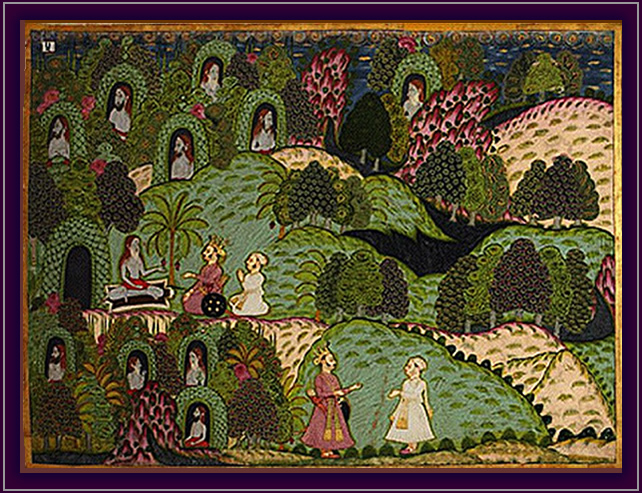
(23) The servants of Indra
found him sitting there in meditation after having
offered his sacrificial oblations, with his eyes
closed as invincible as fire personified.
Chapter
9: Mârkandeya
is Shown
the Lord's Bewildering Potency
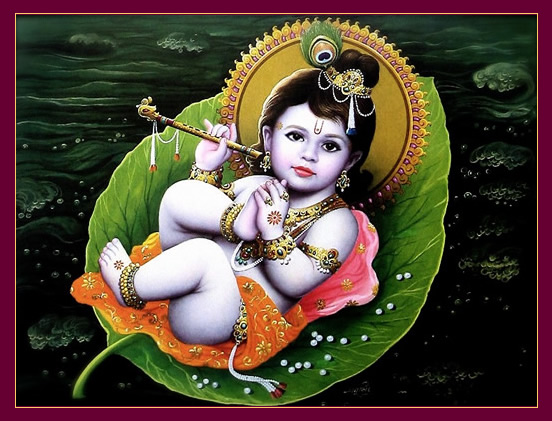
(21) Upon a branch of it
toward the northeast he saw an infant boy lying
within the fold
of a leaf swallowing the darkness with His
effulgence [see also 3.33: 4].
Chapter
10: S'iva,
Lord and Helper
Glorifies Mârkandeya Rishi
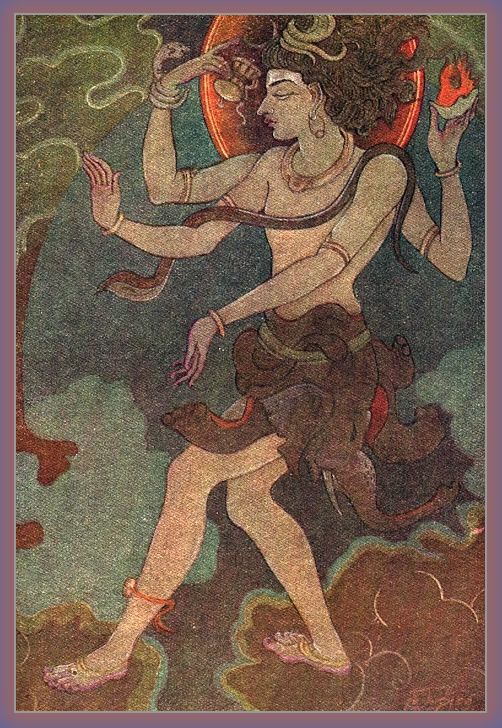
(6) The
mighty Lord said: 'I am sure that the brahmin
seer does not desire any benedictions in any
field, not even liberation, for he has achieved
the transcendental devotional service unto the
Supreme Lord, the Inexhaustible Original Person. (7) Nevertheless Bhavânî,
let us talk to this pure devotee. It certainly
is man's highest achievement to gain the
association of saintly souls.' "
Chapter
11: Vishnu
His Attributes and the
Order of the Month of Him as the Sun-god
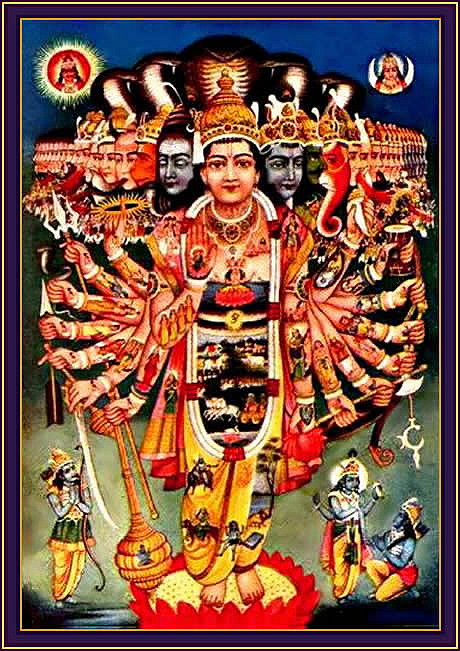
(11-12) His material energy,
consisting of different combinations of the
natural modes, is represented by His flower
garland. The yellow garment He wears stands for
the Vedic meters and His sacred thread
represents the three syllable AUM. The processes
of sânkhya and yoga are carried by the Godhead in the
form of His makara ['sea-monster']
earrings, and His crown, freeing all the worlds
from fear, represents the superior
[transcendental] position.
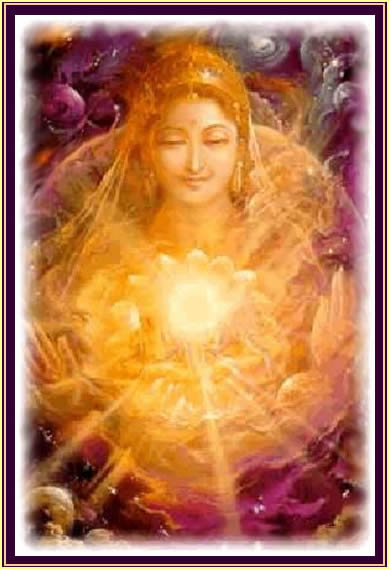
(45)
All these [personalities]
constitute the glories of Vishnu, the Supreme
Personality of Godhead in the form of the sun
god; they take away the sinful reactions of
everyone who in the morning and the evening, day
after day remembers them.
Chapter
12: The
Topics of S'rîmad-Bhâgavatam
Summarized
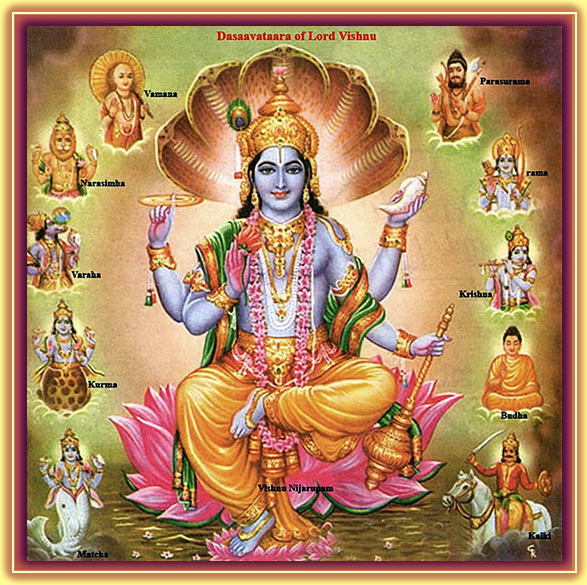
(19-20) The reigns of
the Manus [8.1] are
described in detail as
also the liberation of the king of the elephants
[Gajendra, 8.2-4] and the avatâras of
Lord Vishnu for each period of Manu [8.5 and 13], like
Hayas'îrshâ [8.24: 8 and 57; 5.18: 1], Nrisimha [7.9-10], Vâmana [8.18-22], Mâtsya [8.24] and the
descent of Kûrma for the purpose of [supporting
the] churning by the inhabitants of
heaven of
the nectar from the milk ocean [8.7-8].
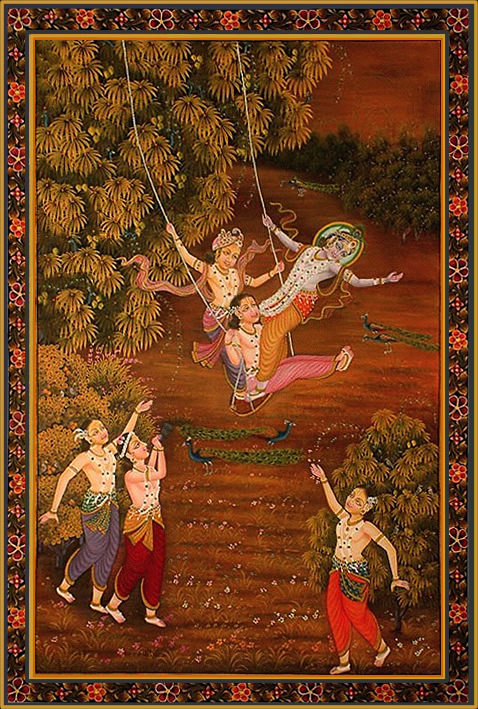
(27) [It is] the
dynasty in which the Supreme Lord known as
Krishna, the Master of the Universe, descended in
the house of Vasudeva. Subsequently His
birth [10.3] and how He
grew up in Gokula are described [10.4-10].
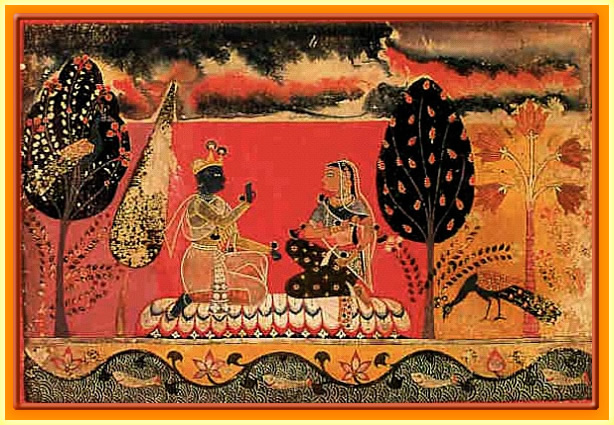
(55) The remembrance of Lord
Krishna's lotus feet destroys everything
inauspicious and leads to good fortune.
Connected in knowledge, wisdom and detachment
one with devotion unto the Supreme Soul arrives
at purification of the heart.
Chapter
13: The Glories of
S'rîmad-Bhâgavatam