Chapter 1: The
Degraded Dynasties and
Corrupt Nature of the Rulers of Kali-yuga
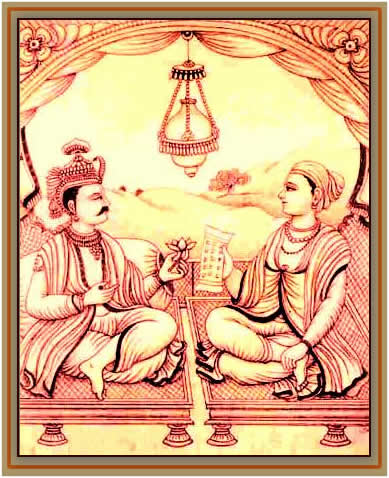
(12) The brahmin will put
Candragupta on the throne and
his son Vârisâra will next be succeeded by
As'okavardhana.
Chapter
2: Despair
and Hope in the Age of Quarrel
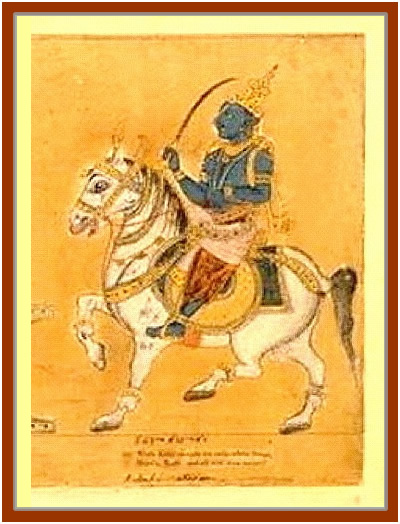
(12-16) When the bodies of all
living entities are in decay from the contamination of
Kali-yuga, when the dutifulness of the members
of all status-orientations is lost, when the
Vedic path for all man has changed into a
predominantly atheistic sense of duty, when the
kings [or governors] mainly consist of thieves,
and the people in their various occupations are
lying criminals of useless violence [against
specially animals], when the societal classes as
good as all are engaged in profit-minded labor,
cows have the same value as goats, the
hermitages hardly can be distinguished from materialistic
households, family bonds do not reach beyond the
ties of marriage, when the plants and herbs are
mostly small sized and all trees are like s'amî trees, when there is always
lightning in the clouds and the homes are ruled
by loneliness [voidism and impersonalism, see Pranâti], when Kali-yuga is
running at its end and the people behave like
asses, the Supreme Lord will descend in the mode
of pure goodness to defend the dharma.
Chapter
3: The
Song of Mother Earth
and Kali-yuga its Remedy
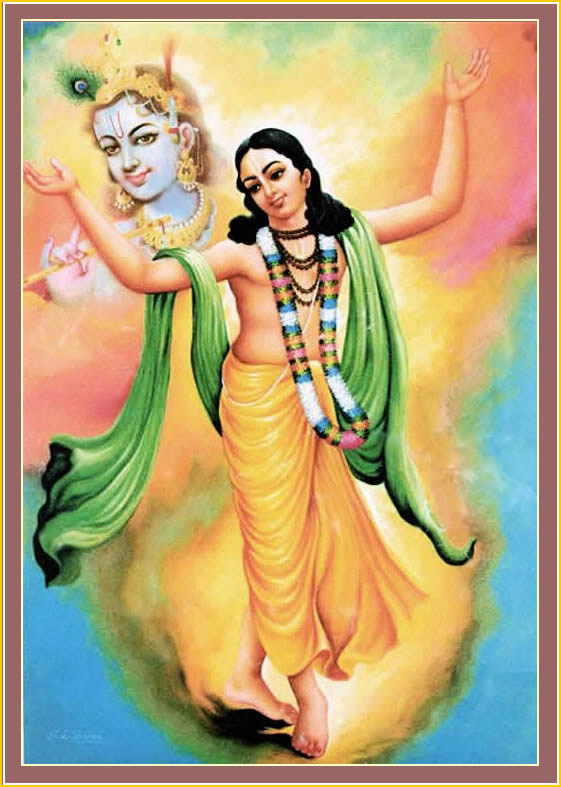
(15) It is
rather the repeated discussing and
singing about the qualities of the Lord Praised
in the Verses, what destroys everything
inauspicious. He who
desires Lord Krishna's pure devotional service
should therefore do that regularly
[seeking that association] and hear
[about Him] time and again.'
Chapter
4: Pralaya:
The Four Types of Annihilation
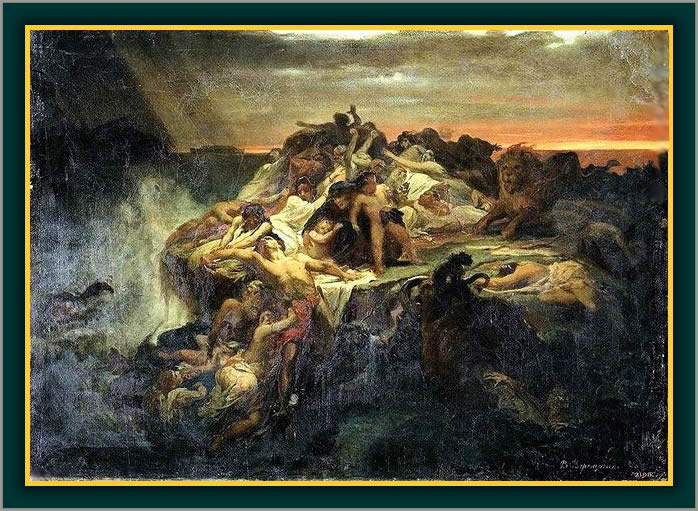
(11) Next for more than a
hundred years the terrible wind of the ultimate
destruction [sâmvartaka]
will blow and
turn the sky gray with dust.
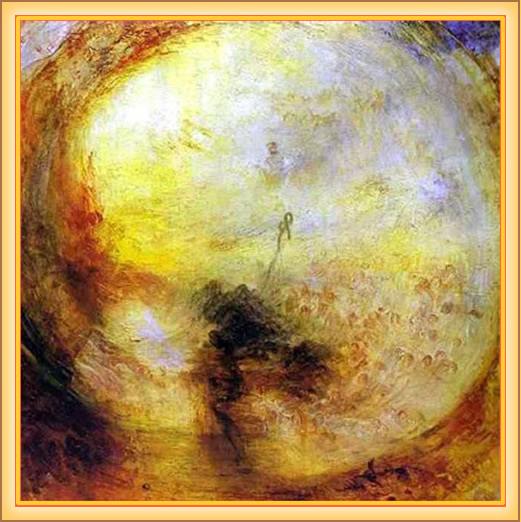
(36) The [more or less
favorable living] conditions of all living
beings subject to transformation, are rapidly
and continuously wiped out by the mighty force
of the current of Time and constitute the causes
of their birth and death.
Chapter
5: Final
Instructions to Mahârâja Parîkchit
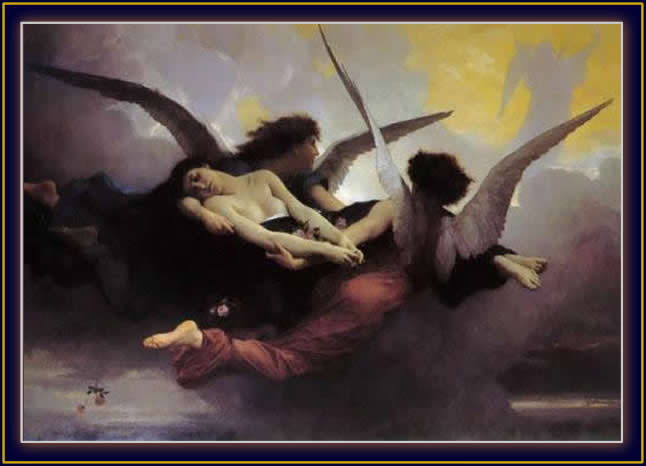
(8) The soul differing from the gross [deha] and the subtle [linga] body, is
self-luminous, and constitutes,
because it is as unchanging as the sky, the
foundation [âdhâra] that is eternal and
beyond comparison.
Chapter
6: Mahârâja
Parîkchit
Liberated and
the Veda Handed Down in Four
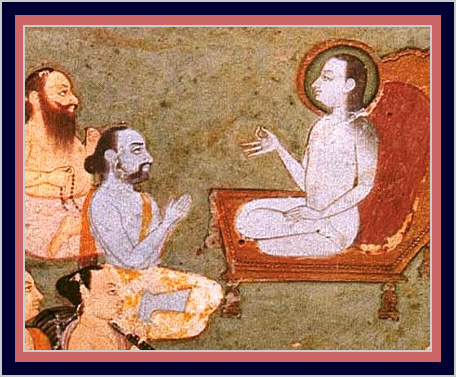
(9-10) Parîkchit, the saintly
king, by
the power of reason thereupon fixed his mind on his soul,
meditated on the Supreme Truth and arrested his
breath. On
the bank of the Ganges sitting on darbha grass laid to the
east, the great yogi, facing the north, free
from all attachment in perfect realization of
the Absolute Spirit broke with all doubts and became as motionless as a tree.
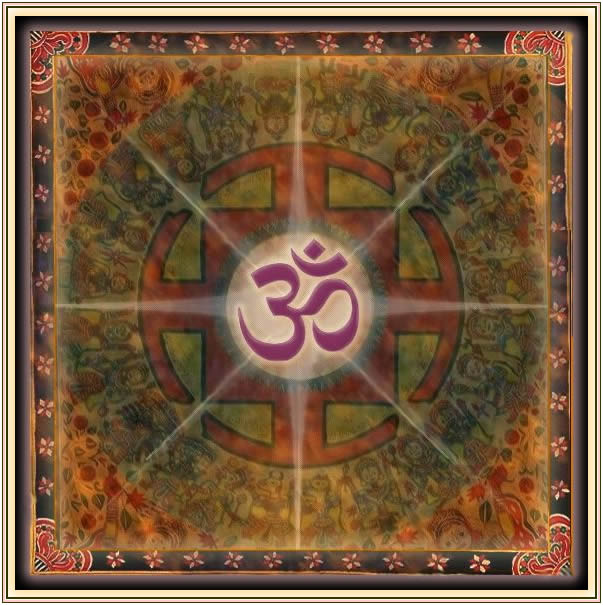
(39) From
that [sound] the threefold omkâra [A-U-M] came into being that,
manifesting itself unseen, constitutes the
representation of the Supreme Lord [Bhagavân],
the Absolute Truth [Brahman] and the Supersoul
[Paramâtmâ, see also 1.2: 11, B.G. 7: 8].
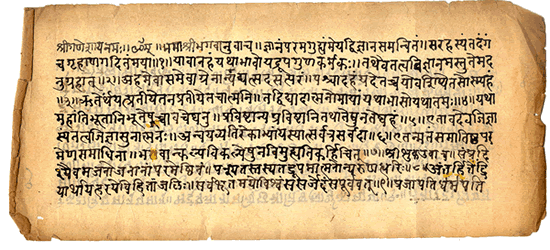
(74) The mighty sage divided the hundreds
of Yajur mantras in fifteen branches that were
accepted by the disciples Kânva, Mâdhyandina and
others under the name Vâjasaneyi: 'stemming from
the manes of the horse.'
Chapter
7: The
Devotion in Samhitâ Branches
and the Ten Topics of the Purânas
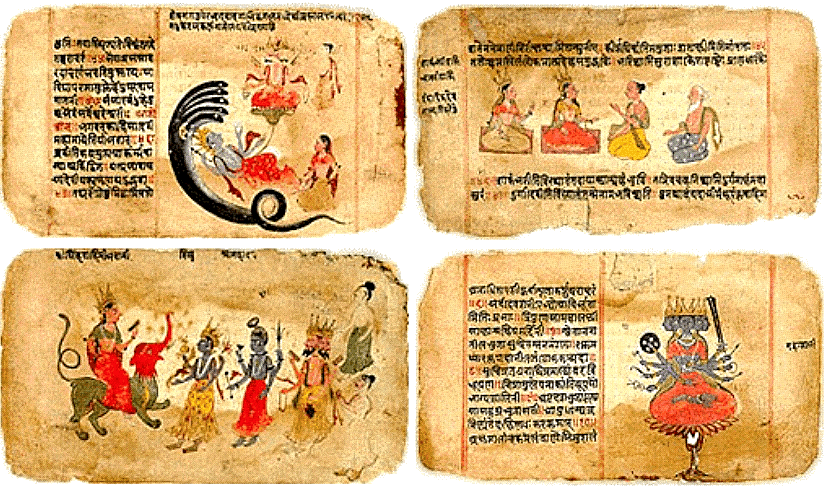
(9-10) The creation [of this
universe, sarga], the subsequent
creation [of different worlds and beings, visarga], the maintenance [the
sustenance, the vritti or sthâna] and
protection [the rakshâ or poshana
of the living beings], the reigns [of the
various Manus], the dynasties [vams'as], the narrations about
them [vams'a-anucaritam],
the
annihilation
[of
different
kinds, pralaya or samsthâ],
the reason [the individual living entity or hetu]
and the supreme shelter [of the Fortunate One or
apâs'raya], oh brahmin, are the ten
topics characterizing a Purâna as understood by
the authorities on the matter. Some state that
relative to the greater ones, the smaller
Purânas deal with only five of these subjects [see also S'uka
on this 2.10: 1-7 and *].
For copyright
notices concerning the individual images
please
look at the bottom of the chapter they
belong to.