|
|
The Book
|
The writer
|
|
 Welcome
to the site of the Śrīmad Bhāgavatam (or the Bhāgavata Purāṇa). Here
you will find the complete and
up-to-date version maintained in
Sanskrit, English and Dutch of
this most important sacred book of
stories of India. India knows many
Purāṇas or
storybooks, but this collection of
stories is generally accepted as
being the most complete and
important. The book, arranged in
twelve so-called Cantos,
comprises 335 chapters with about
18000 verses. Truly a
bible thus [a so-called Samhitā]. It is
this collection of stories that
stresses the prime importance of
the maintaining aspect of God
personified by the transcendental
form of Lord
Viṣṇu. Welcome
to the site of the Śrīmad Bhāgavatam (or the Bhāgavata Purāṇa). Here
you will find the complete and
up-to-date version maintained in
Sanskrit, English and Dutch of
this most important sacred book of
stories of India. India knows many
Purāṇas or
storybooks, but this collection of
stories is generally accepted as
being the most complete and
important. The book, arranged in
twelve so-called Cantos,
comprises 335 chapters with about
18000 verses. Truly a
bible thus [a so-called Samhitā]. It is
this collection of stories that
stresses the prime importance of
the maintaining aspect of God
personified by the transcendental
form of Lord
Viṣṇu.
|
 The
writer of this book is named Kṛṣṇa Dvaipāyana Vyāsadeva, also
called Bādarāyana. He
is the Lord, the bhagavān, among
the philosophers, who in India
assembled all the holy texts. He
compiled the Vedas, also known as
śruti,
containing the basic wisdom, the
mantras for the rituals and the
hymns. He also wrote the Mahābhārata, which
is the greatest epic poem in the
world. It describes the history (Itihāsa) of the
great fall that the Vedic culture
once made. The Bhagavad Gītā is the
most important part of it. Vyāsa also
wrote the rest of the eighteen
great story books (the Purāṇas) of
India
as
also
the
Brahma-sūtra, his masterpiece on
the Absolute Truth. The
writer of this book is named Kṛṣṇa Dvaipāyana Vyāsadeva, also
called Bādarāyana. He
is the Lord, the bhagavān, among
the philosophers, who in India
assembled all the holy texts. He
compiled the Vedas, also known as
śruti,
containing the basic wisdom, the
mantras for the rituals and the
hymns. He also wrote the Mahābhārata, which
is the greatest epic poem in the
world. It describes the history (Itihāsa) of the
great fall that the Vedic culture
once made. The Bhagavad Gītā is the
most important part of it. Vyāsa also
wrote the rest of the eighteen
great story books (the Purāṇas) of
India
as
also
the
Brahma-sūtra, his masterpiece on
the Absolute Truth.
|
|
The person
|
The culture
|
|
 The
representative of Viṣṇu on earth
is named the Fortunate One in this
book. We know Him specifically by
the names of Lord Rāma and Lord Kṛṣṇa. The
Fortunate One is thus the Lord who
is known in different forms or
incarnations, but also the
devotees are part of His reality
and are also called bhāgavata when
they are of pure devotion.
Thus there is the Lord in His many
appearances, the devotee with as
many faces and the book. They are
all called Fortunate. To be
fortunate means to be of the
opulence, or to carry, or live by,
the fullness of God's riches,
beauty, fame, power, knowledge and
detachment. The
representative of Viṣṇu on earth
is named the Fortunate One in this
book. We know Him specifically by
the names of Lord Rāma and Lord Kṛṣṇa. The
Fortunate One is thus the Lord who
is known in different forms or
incarnations, but also the
devotees are part of His reality
and are also called bhāgavata when
they are of pure devotion.
Thus there is the Lord in His many
appearances, the devotee with as
many faces and the book. They are
all called Fortunate. To be
fortunate means to be of the
opulence, or to carry, or live by,
the fullness of God's riches,
beauty, fame, power, knowledge and
detachment.
|
 Vyāsa was a
grandfather of the Kuru dynasty.
He lived a very long time. His
long duration of life enabled him
to write the story of the
Fortunate One and all the other
books. He had a son called Śukadeva who
handed the message of this bible
down to another member of the
family, Emperor Parīkṣit, who had
difficulty respecting the
classical wisdom. This emperor is
there as a model for us normal
people who seek their stability in
the wisdom. This knowledge was
conveyed by Śuka in
disciplic succession (paramparā),
to those who teach by example
(the ācāryas) the
science of devotional service (bhakti). This
book, and its culture, was brought
to the West by the Vaishnava, the Viṣṇu-monk, Swami A. C.
Bhaktivedanta Prabhupāda.
Together with his pupils (known as
the Hare
Kṛṣṇas of
ISKCON) he
realized a verse by verse
commented series of books covering
the entire Bhāgavatam.
This site offers not all these
texts (see for that purpose vedabase.io) but
does offer under the Creative
Commons copyright an
as-it-is translation of the verses
in a concatenated form complete
with the previous version. This
text is regularly updated and
maintained by Anand
Aadhar
Prabhu (René P. B. A.
Meijer), a Dutch
psychologist converted to the
philosophy of yoga who received
instruction in the temples of
ISKCON and elsewhere. His
predecessor in this duty was Śrī Hayeśvar das (Hendrik
van Teylingen) who covered most of
the translations into Dutch. Vyāsa was a
grandfather of the Kuru dynasty.
He lived a very long time. His
long duration of life enabled him
to write the story of the
Fortunate One and all the other
books. He had a son called Śukadeva who
handed the message of this bible
down to another member of the
family, Emperor Parīkṣit, who had
difficulty respecting the
classical wisdom. This emperor is
there as a model for us normal
people who seek their stability in
the wisdom. This knowledge was
conveyed by Śuka in
disciplic succession (paramparā),
to those who teach by example
(the ācāryas) the
science of devotional service (bhakti). This
book, and its culture, was brought
to the West by the Vaishnava, the Viṣṇu-monk, Swami A. C.
Bhaktivedanta Prabhupāda.
Together with his pupils (known as
the Hare
Kṛṣṇas of
ISKCON) he
realized a verse by verse
commented series of books covering
the entire Bhāgavatam.
This site offers not all these
texts (see for that purpose vedabase.io) but
does offer under the Creative
Commons copyright an
as-it-is translation of the verses
in a concatenated form complete
with the previous version. This
text is regularly updated and
maintained by Anand
Aadhar
Prabhu (René P. B. A.
Meijer), a Dutch
psychologist converted to the
philosophy of yoga who received
instruction in the temples of
ISKCON and elsewhere. His
predecessor in this duty was Śrī Hayeśvar das (Hendrik
van Teylingen) who covered most of
the translations into Dutch.
|

|
|
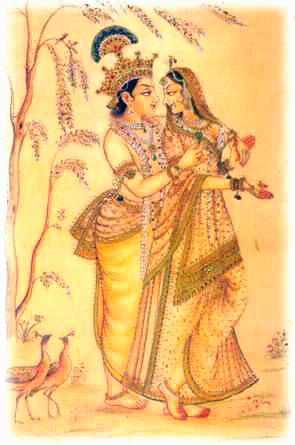
|
The Bhāgavatam
centers around the love
of Lord Kṛṣṇa
|
The Uddhava Gītā
update 11-07-'22
in e-book
pdf format
and in
epub
format.
_____
The Summum
Bonum
(tenth Canto)
update
01-24-'22
in e-book
pdf format.
|