Canto
4
Chapter 3: The Talk Between Lord S'iva and Satî
(1) Maitreya said: 'Thus the heartily enmity that existed between the son-in-law and father-in-law, continued for a very long time. (2) When Daksha by Brahmâ was appointed the chief of all the progenitors of mankind, the supreme teacher, he became very arrogant. (3) Neglecting S'iva and his followers he, after first performing a Vâjapeya sacrifice ['the drink of strength or battle'], began the best of all sacrifices called the Brihaspati-sava sacrifice [the initiatory sacrifice to the honor of the chief offerer of prayers and sacrifice]. (4) To that occasion all the God-conscious and learned souls of wisdom, the ancestors and the demigods including the nicely decorated wives who accompanied their husbands, came together. (5-7) Satî, the daughter of Daksha and wife of S'iva, heard the denizens of heaven talk in the sky about the great festival to be performed by her father. When she thereupon near her residence from all sides saw the beautiful wives of the godly souls with glittering eyes, in nice dresses with golden earrings and ornaments around their necks, move about in their heavenly vehicles to go there together with their husbands, she highly anxious addressed her husband, the Lord and master of the Bhûtas [those in favor of matter and the dead]. (8) Satî said: 'Your father-in-law, Daksha, has initiated a great sacrifice where all the God-conscious souls are going and where we surely thus also may go to, my dearest, if you like. (9) I am sure that my sisters together with their husbands will also be going there, eager to see their relatives. I would like to attend that gathering together with you and all the ornaments given to me. Do you consent? (10) I will meet my sisters there with their husbands as also my sweet aunts and my mother. I have been waiting for a long time to see them including the sacrificial flags raised by the great sages, oh merciful one. (11) This manifestation of His external energy that was created as an interaction of the three modes, appears so wonderful to you, oh unborn one. But I am just your poor woman, not conversant with the truth, who would like to see her place of birth, oh Bhava [S'iva as the Lord of existence]. (12) Oh never-born blue-throated one, all the other women, ornamented and with their husbands and friends, are flocking in large numbers going there, standing beautifully out against the sky with their white swans that carry them high. (13) How can I as a daughter be emotionally unaffected, oh best of the demigods, as I hear about the festival taking place in the house of my father? Even not being invited one can go to the house of a friend, one's husband, one's father or one's spiritual master, is it not? (14) Be therefore so kind to me, oh immortal one, and fulfill my desire, oh you honorable compassionate Lord with your unlimited vision. See me as the [full] other half of your body, please be so gracious to consent to my request.'
(15) The sage said: 'The deliverer from mount Kailâsa [Lord S'iva] thus being addressed by his sweetheart, amiable to his relatives as he was, replied with a smile, as he remembered the heart-piercing, malicious words spoken by Daksha in the presence of the masters of creation. (16) The great Lord said: 'What you said my dear beauty, is perfectly true; one may, even uninvited, visit friends, provided they are not finding fault with you or, more important, when they are free from anger in being proud of their material achievements. (17) Those who are arrogant, are blinded in their pride over the six qualities of pious education, austerity, wealth, beauty, youth and heritage. Not of respect for the glories of the great souls they, to the contrary, get entangled in untruth and lose their sense of reality. (18) One should not go to the house of relatives and friends who, in their suppositions, do not see things as they are and thus offer their guests a cold reception by regarding them with raised eyebrows and anger in their eyes. (19) One is not hurt as much by the arrows of an enemy as one is aggrieved in the core of one's heart by the deceitful, harsh words of relatives, for such grief makes the one hurt suffer day and night. (20) It is clear that you with your pretty face and good behavior are the darling of the daughters of the Prajâpati [Daksha], yet, you will, because of being connected to me, meet with pain because your father does not honor me. (21) Someone upset with a burning heart is not directly capable of rising to merely the standard of the exemplary pious behavior of those whose minds are always turned to the Original Person, just as demons envious of the Lord cannot act piously. (22) My dear young wife, to stand up and welcome one another with obeisances is a virtue of the sages who, with intelligence unto the Supreme, do so for the sake of the Original Person residing within the body and not for the person identified with the body. (23) The pure consciousness known as Vasudeva ['God's goodness'] is revealed there [within the heart] because the person in that position is in goodness and is not covered [by darkness]. The Supreme Lord as such I always respect by the name of Vāsudeva [the 'God of the Soul'] because He is the transcendence. (24) We should therefore not go and see your father Daksha and his Vis'vasrik followers present at the sacrifice. Even though he gave you your body, oh Satî, [remember that] he with cruel words enviously has insulted me who was innocent. (25) When you decide to go there ignoring my words, matters will not turn out good for you. The moment that you, being so most respectable, are insulted by your relative, that insult will be equal to dying on the spot.'


Third revised edition, loaded April 3, 2024.

Previous Aadhar edition and Vedabase links:
Maitreya said: 'Thus the heartily enmity that existed between the son-in-law and father-in-law, continued for a very long time'.
Maitreya said: 'The this way continuing heartfelt enmity that existed between the son- and father-in-law, covered even a very long period of time. (Vedabase)
When Daksha by Brahmâ was appointed the chief of all the progenitors of mankind, the supreme teacher, he became very arrogant.
When Daksha was appointed the chief of all the progenitors of mankind by Brahmâ, the supreme teacher, he became very puffed up. (Vedabase)
Neglecting S'iva and his followers he, after first performing a Vâjapeya sacrifice ['the drink of strength or battle'], began the best of all sacrifices called the Brihaspati-sava sacrifice [the initiatory sacrifice to the honor of the chief offerer of prayers and sacrifice].
Neglecting S'iva and his followers he, after first performing a Vâjapeya ['the drink of strength or battle'] sacrifice, began the best of sacrifices called the Brihaspati [the chief offerer of prayers and sacrifice]-sacrifice. (Vedabase)
To that occasion all the God-conscious and learned souls of wisdom, the ancestors and the demigods including the nicely decorated wives who accompanied their husbands, came together.
To that all the godly and learned of wisdom, the ancestors and the demigods and the nicely decorated wives accompanying their husbands, assembled. (Vedabase)
Satî, the daughter of Daksha and wife of S'iva, heard the denizens of heaven talk in the sky about the great festival to be performed by her father. When she thereupon near her residence from all sides saw the beautiful wives of the godly souls with glittering eyes, in nice dresses with golden earrings and ornaments around their necks, move about in their heavenly vehicles to go there together with their husbands, she highly anxious addressed her husband, the Lord and master of the Bhûtas [those in favor of matter and the dead].
Satî, the daughter of Daksha and wife of S'iva, heard the denizens of heaven talk about the great festival to be performed by her father, and when she saw near her residence the beautiful wives of the godly ones with glittering eyes and earrings from all directions, in nice dresses and fully ornamented, fly about along with their husbands to go there, she highly anxious addressed her husband, the Lord and master of the Bhûtas [the ones of matter and the dead]. (Vedabase)
Satî said: 'Your father-in-law, Daksha, has initiated a great sacrifice where all the God-conscious souls are going and where we surely thus also may go to, my dearest, if you like.
Satî said: 'Your father-in-law, Daksha, is about to begin a great sacrifice where all the godly ones are going and where we surely thus also may go to, my dearest, if you desire so. (Vedabase)
I am sure that my sisters together with their husbands will also be going there, eager to see their relatives. I would like to attend that gathering together with you and all the ornaments given to me. Do you consent?
Surely my sisters with their own husbands will also be going there eager to see their relatives; could you please accept to attend to that assembly with me and all the ornaments given to me? (Vedabase)
I will meet my sisters there with their husbands as also my sweet aunts and my mother. I have been waiting for a long time to see them including the sacrificial flags raised by the great sages, oh merciful one.
Surely I will meet there with my sisters and their husbands and my affectionate aunts and my mother; for a long time I've been waiting to see them as well as the sacrificial flags raised by the great sages, o merciful one. (Vedabase)
This manifestation of His external energy that was created as an interaction of the three modes, appears so wonderful to you, oh unborn one. But I am just your poor woman, not conversant with the truth, who would like to see her place of birth, oh Bhava [S'iva as the Lord of existence].
By you, as the unborn, appears this external manifestation, created from the soul as an interaction to the three modes, so wonderful; nevertheless I consider myself, as a woman to your pleasure, not conversant with the truth, and as your poor one, I would like to see my place of birth, o Bhava [S'iva as the Lord of existence]. (Vedabase)
Oh never-born blue-throated one, all the other women, ornamented and with their husbands and friends, are flocking in large numbers going there, standing beautifully out against the sky with their white swans that carry them high.
O immaterial, blue-throated one, surely are the other women, ornamented and with their husbands and friends, in large numbers flying there, beautifully in the sky with their white swans carrying them high. (Vedabase)
How can I as a daughter be emotionally unaffected, oh best of the demigods, as I hear about the festival taking place in the house of my father? Even not being invited one can go to the house of a friend, one's husband, one's father or one's spiritual master, is it not?
How can I be physically unaffected, o best of the demigods, as a daughter hearing of the festival taking place in the house of my father; even being uninvited one can go the house of a friend, one's husband, one's father or spiritual master, isn't it? (Vedabase)
Be therefore so kind to me, oh immortal one, and fulfill my desire, oh you honorable compassionate Lord with your unlimited vision. See me as the [full] other half of your body, please be so gracious to consent to my request.'
Be therefore kind to me, o immortal one, and fulfill my desire, o your honor, o compassionate Lord, in the full of seeing me as the other half of your body; please be so gracious to answer my request'. (Vedabase)
The sage said: 'The deliverer from mount Kailâsa [Lord S'iva] thus being addressed by his sweetheart, amiable to his relatives as he was, replied with a smile, as he remembered the heart-piercing, malicious words spoken by Daksha in the presence of the masters of creation.
The sage said: 'The deliverer from mount Kailâsa [Lord S'iva], thus addressed by his dearest, replied, being dear to his relatives, smilingly, while remembering the heart-piercing malicious words that Daksha had spoken in the presence of the guardians of the creation. (Vedabase)
The great Lord said: 'What you said my dear beauty, is perfectly true; one may, even uninvited, visit friends, provided they are not finding fault with you or, more important, when they are free from anger in being proud of their material achievements.
The great Lord said: 'What you said, my dear beauty, is certainly true: one can, even uninvited, go to friends, provided they are not finding fault or, more important, are not of anger being proud in their identifications. (Vedabase)
Those who are arrogant, are blinded in their pride over the six qualities of pious education, austerity, wealth, beauty, youth and heritage. Not of respect for the glories of the great souls they, to the contrary, get entangled in untruth and lose their sense of reality.
By the six qualities of the pious of education, austerity, wealth, beauty, youth and heritage are the ones who are arrogant blinded; not looking for the glories of the great souls do they lose their good sense and get they estranged in untruth. (Vedabase)
Text 18
One should not go to the house of relatives and friends who, in their suppositions, do not see things as they are and thus offer their guests a cold reception by regarding them with raised eyebrows and anger in their eyes.
One should not go to the house of relatives and friends who, dependent in that, are disturbed that way in their minds and give their guests a cold reception regarding them with raised eyebrows and anger in their eyes. (Vedabase)
One is not hurt as much by the arrows of an enemy as one is aggrieved in the core of one's heart by the deceitful, harsh words of relatives, for such grief makes the one hurt suffer day and night.
One is not as much hurt by the arrows of an enemy as one, in a part of one's heart, is aggrieved by the deceitful, harsh words of relatives from which the one being hurt suffers day and night. (Vedabase)
It is clear that you with your pretty face and good behavior are the darling of the daughters of the Prajâpati [Daksha], yet, you will, because of being connected to me, meet with pain because your father does not honor me.
It is clear that you, being of the best behavior, with your pretty face, are considered the darling of the daughters of the Prajâpati [Daksha], yet, with me not being honored by your father, will you, from being connected with me, meet with pain from him. (Vedabase)
Someone upset with a burning heart is not directly capable of rising to merely the standard of the exemplary pious behavior of those whose minds are always turned to the Original Person, just as demons envious of the Lord cannot act piously.
One who with a burning heart is in distress is, concerning the pious reputation of those who in their minds are always looking for the original person, not able to rise directly to merely the standard of them, as much as demons can't who envy the Lord. (Vedabase)My dear young wife, to stand up and welcome one another with obeisances is a virtue of the sages who, with intelligence unto the Supreme, do so for the sake of the Original Person residing within the body and not for the person identified with the body.
O dear young wife of mine, the intent to mutually stand up and welcome one another with obeisances is proper, but certainly do the ones of wisdom with the intelligence unto the Supreme direct themselves to the Original Person that sits within the body, and certainly not to the one who has set his mind on the body. (Vedabase)
The pure consciousness known as Vasudeva ['God's goodness'] is revealed there [within the heart] because the person in that position is in goodness and is not covered [by darkness]. The Supreme Lord as such I always respect by the name of Vāsudeva [the 'God of the Soul'] because He is the transcendence.
The pure consciousness known as Vâsudeva is revealed there [within] because the person is then in goodness and not covered [by darkness]; in that is by me the Supreme Lord always respected by the name of Vâsudeva [the 'God of the Soul'] because He is the transcendental. (Vedabase)
We should therefore not go and see your father Daksha and his Vis'vasrik followers present at the sacrifice. Even though he gave you your body, oh Satî, [remember that] he with cruel words enviously has insulted me who was innocent.
Therefore your father, Daksha, and his Vis'vasrik followers present at the sacrifice are not to be met, although he gave you your body, o Satî, as he has enviously insulted me, who was innocent, with cruel words. (Vedabase)
When you decide to go there ignoring my words, matters will not turn out good for you. The moment that you, being so most respectable, are insulted by your relative, that insult will be equal to dying on the spot.'
If you decide to go in neglect of my words, will things not turn out good for you; when you are insulted by your relative, will that insult directly equal death. (Vedabase)

The text and audio are offered under the
conditions of
the
Creative Commons
Attribution-Noncommercial-Share Alike
3.0
Unported License.
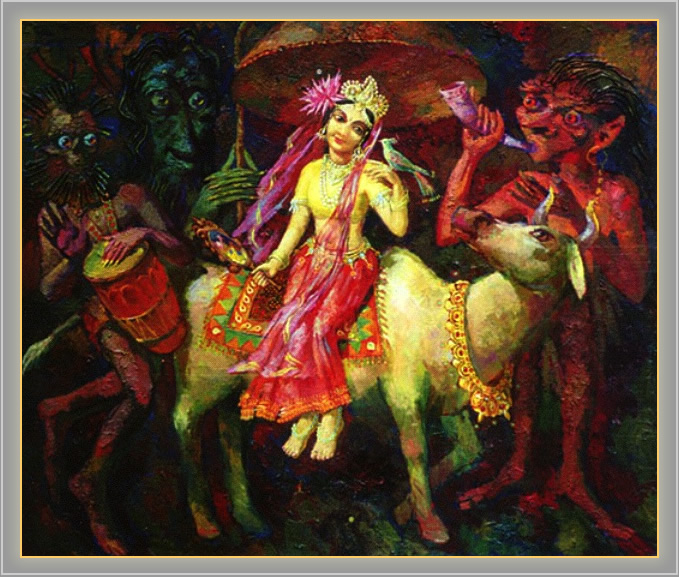
The painting of Satî desirous of visiting her family
is © of Vlad
Holst.
Used
wirth permission.
Production: Filognostic
Association
of The
Order of Time.

Feed-back | Links | Downloads | Music | Pictures | What's New | Search | Donations